 TickRate Games
Dev blog ·
Dev Blog #1 — Between grand strategy and city builders
Hi everyone, and welcome to the very first dev blog for The Unquiet Age!
Before we get into roads, rivers and soldiers in later posts, I want to start with the basics: what kind of game this is, which games it borrows from, and the handful of rules I keep coming back to when I design it.
Two genres have shaped how I think about strategy games, and I love both of them. Each one also stops just short of what I want to play.
Grand strategy gives you a whole state to run, over decades, with wars and economies that affect each other. But a lot of that state only exists as numbers. A province is a row of values, and most of what happens comes from modifiers stacked on top: +10% production here, −15% supply there. You get very good at tuning numbers, but you rarely see what they stand for.
City builders are the other way round. Goods get carried, buildings stand somewhere, and you can watch a traffic jam form outside the warehouse. The catch is the scale. You're running one town, and you place every house and every workshop yourself.
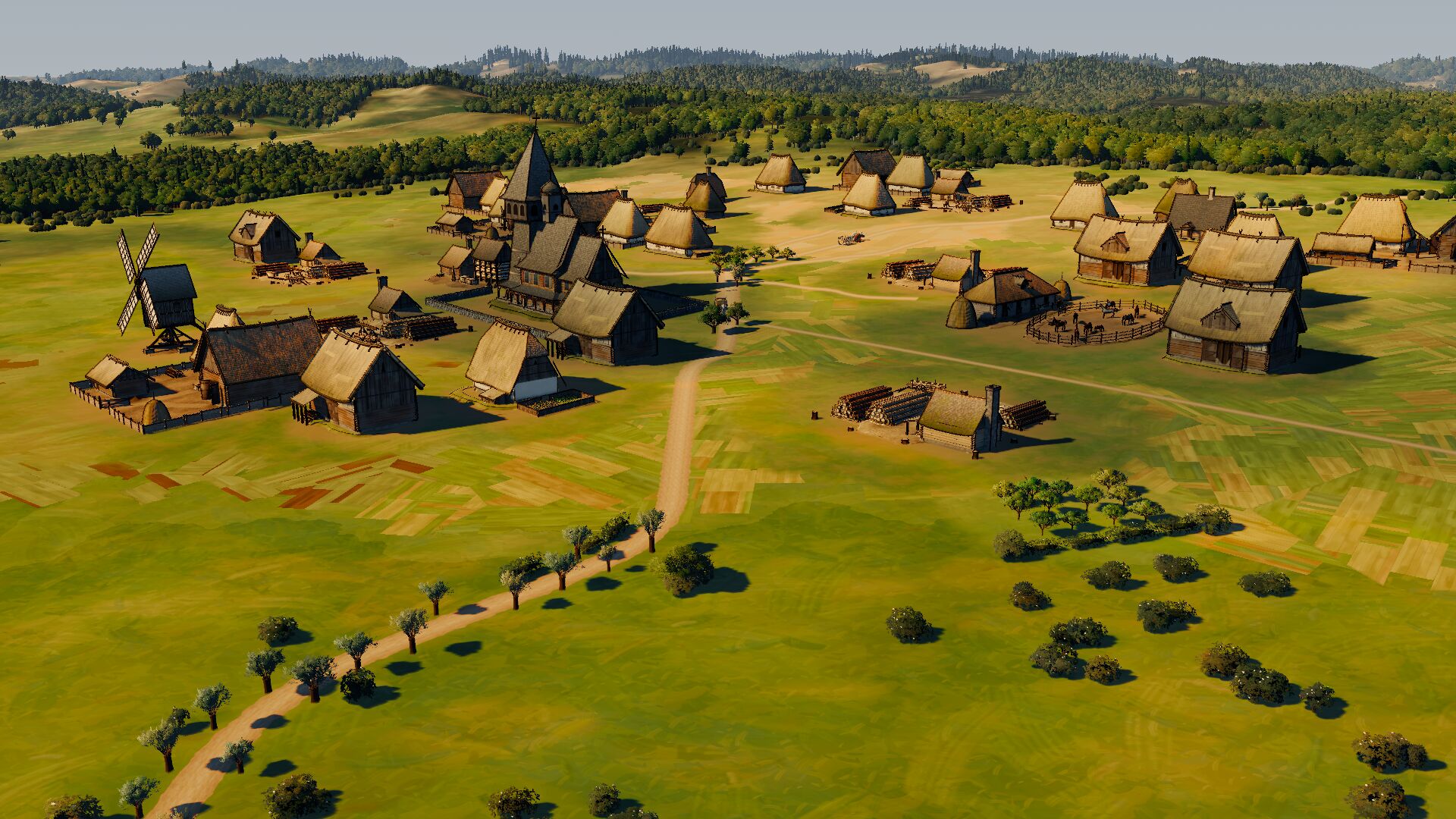
The Unquiet Age tries to get the scale of grand strategy and the physical world of a city builder, without all the hand-placing. Everything your state does depends on goods, money and people actually moving around the map. When that turns into a war, you can take command of the battles yourself, turn by turn.
What I'm borrowing
These are the games I keep going back to, and the one thing I'm taking from each:
- Victoria 3: an economy that invests on its own. The state sets the conditions instead of ordering every factory.
- Manor Lords: settlements that feel physical and grow naturally instead of on a grid.
- Mount & Blade: a living world of towns and kingdoms, where you can own a few buildings and run your own trade on the side.
- Total War: a campaign map where you raise an army and can personally take over the battles that matter.
I'm not trying to glue all of those together. A game that tries to be all of them at once ends up with a dozen shallow systems fighting for your attention. The plan is to keep the game narrow but deep: a small number of systems that are closely connected, so the interesting stuff comes from how they affect each other.
You play the state
You don't play a character at court. There are no marriages, no inheritance drama and no nobles who dislike you because of something your grandfather did. You're also not the mayor, so you'll never have to decide that a town needs a fourth bakery.
You play the state, and you control the things a state controls:
- the treasury, and what it pays for first;
- roads, bridges, depots and fortifications;
- big construction projects and stepping into the economy when it matters;
- getting the army ready and calling people up;
- institutions like a hospital, an engineering academy or a water board;
- diplomacy and the big policy decisions.
Everyday economic life takes care of itself. When bread gets expensive, baking pays well, and if there are people and money to spare, someone opens another bakery. The locals react to what's in front of them: their own prices, their own customers. They won't plan for a war three years from now, or for a road nobody has built yet, so that part is up to you.
Rule 1: Simulate causes, not modifiers
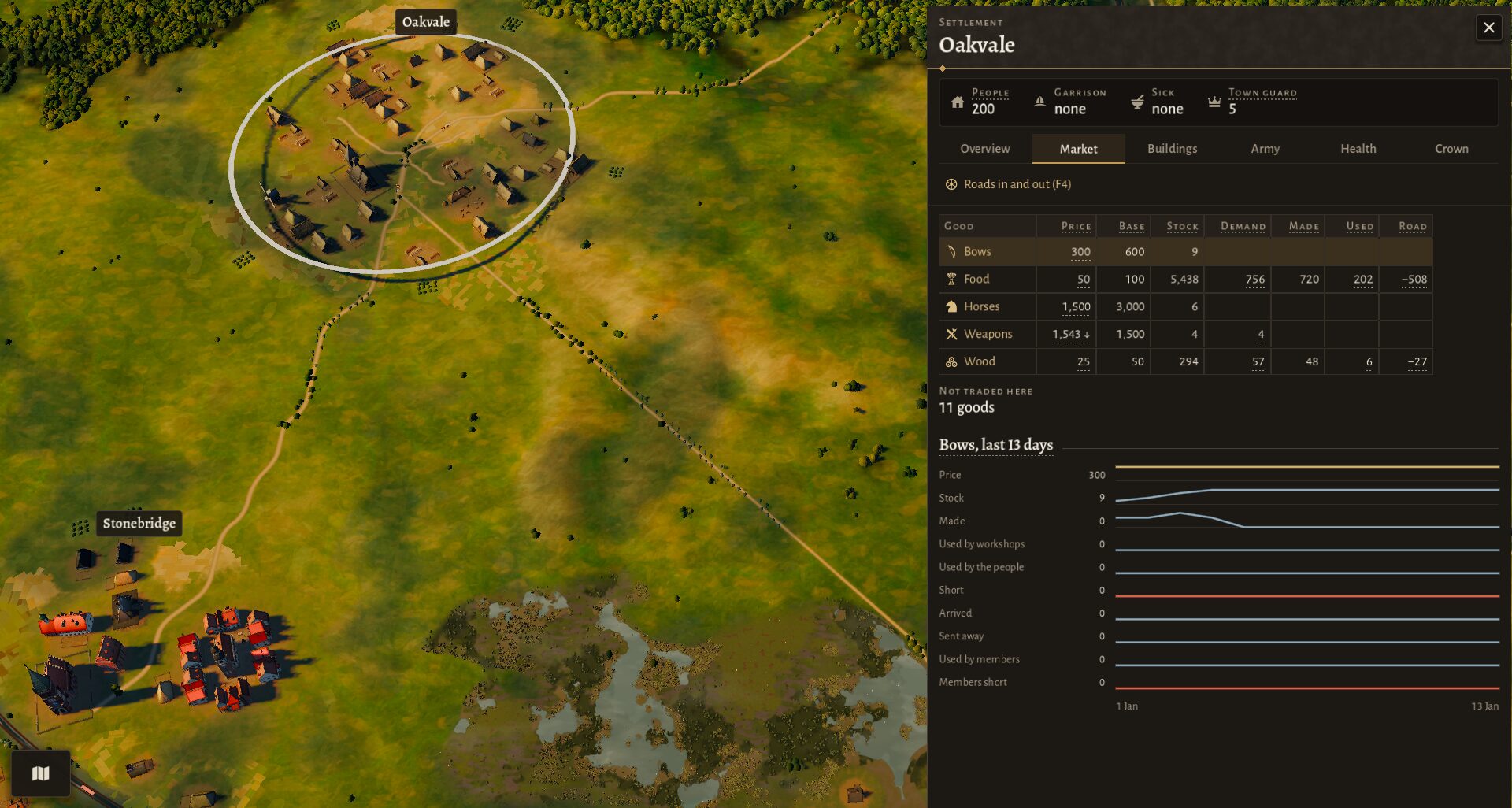
When something happens, you should be able to trace why on the map. Here's how a region might grow:
weapons sell well → workshops expand → they need more iron → the mines make more money → the roads can't keep up → you pay for a road and a bridge → mining grows → the town grows → you collect more taxes.
You never ordered a single workshop. You only changed the conditions they work under. Calling up an army works the same way in the other direction:
recruits leave the fields → less food gets grown → bread gets expensive → more food is brought in → the roads fill up.
A flat "−10% food during war" can't do that, and it can't affect anything else either. An actual shortage of workers can. It competes with your road project for labour, makes your armoury more expensive and makes the next round of recruiting harder.
The same goes for your own projects. A fortress needs stone, timber, iron and workers, and you buy them from the same markets everybody else uses. Build one and stone gets pricier, quarries expand, workers move, and private building gets more expensive for a while. All of that comes out of the markets, with no scripted penalty involved.
And it has to explain itself
A deep simulation is no fun if you can't tell why things happened. If a town is doing worse, the game should show you the reasons (less trade, a bad harvest, emergency taxes) and let you keep clicking until you reach the real answer: "The army took the horses, so there were fewer carts, so the grain stopped going out. Oops. That was me." Showing those reasons is a big part of the game, so it gets built alongside each system.
Rule 2: Every system has to give you a decision
Realism alone isn't a reason to add something. I'm not adding systems because they'd be cool to simulate. Each one has to give you a real decision to make, and if it doesn't, it goes.
That has already cost me some work. An early version of the economy tracked money very carefully: purses, household savings, market fees, Crown officials, every coin moving from one to the other. I built all of it, and then went through it piece by piece asking what decision does this give the player? For most of it the honest answer was "none". It mostly existed to keep the books balanced. What's left now is one exact treasury where every coin has a reason you can look up.
Rule 3: The map shapes the realm
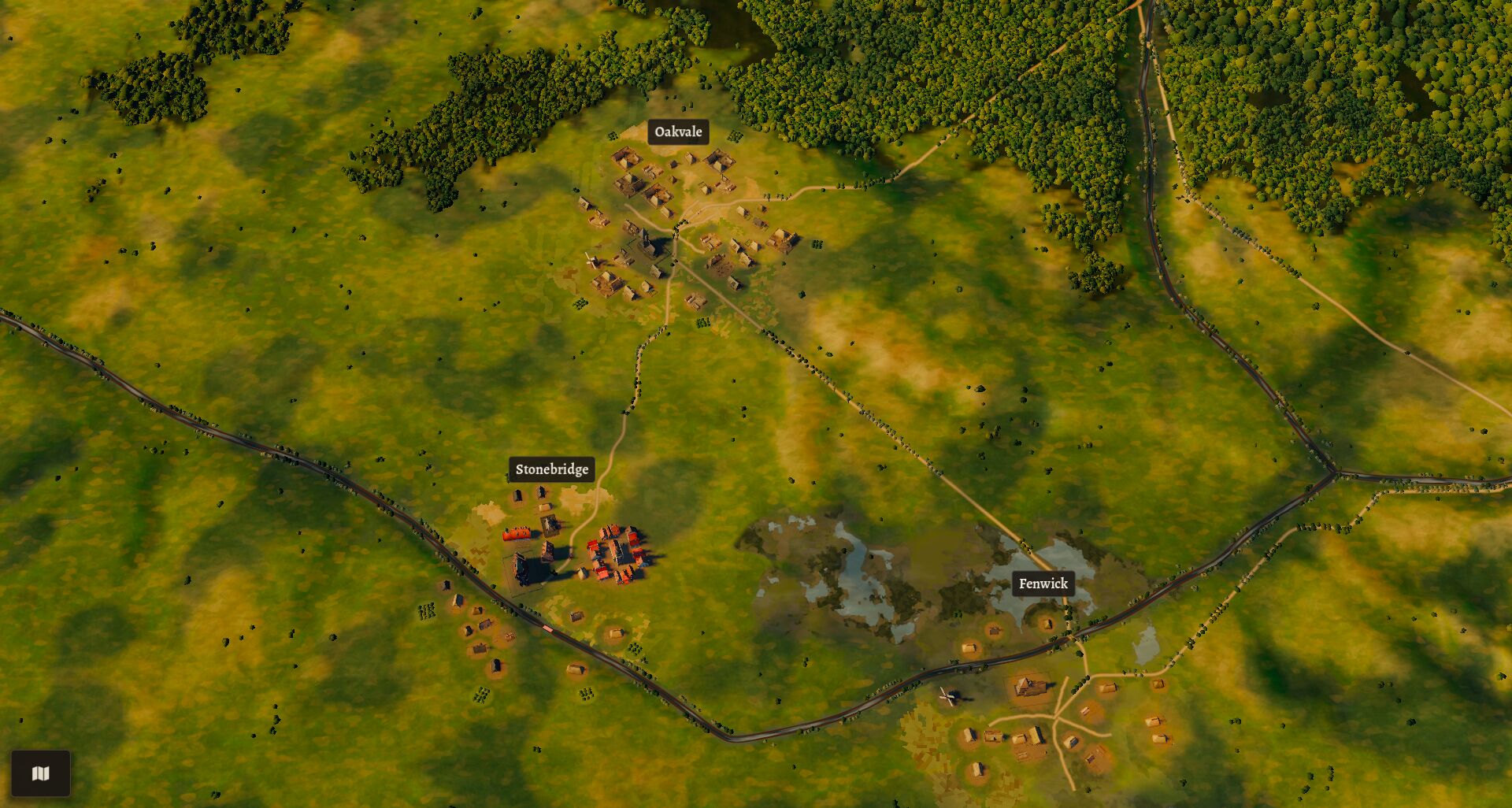
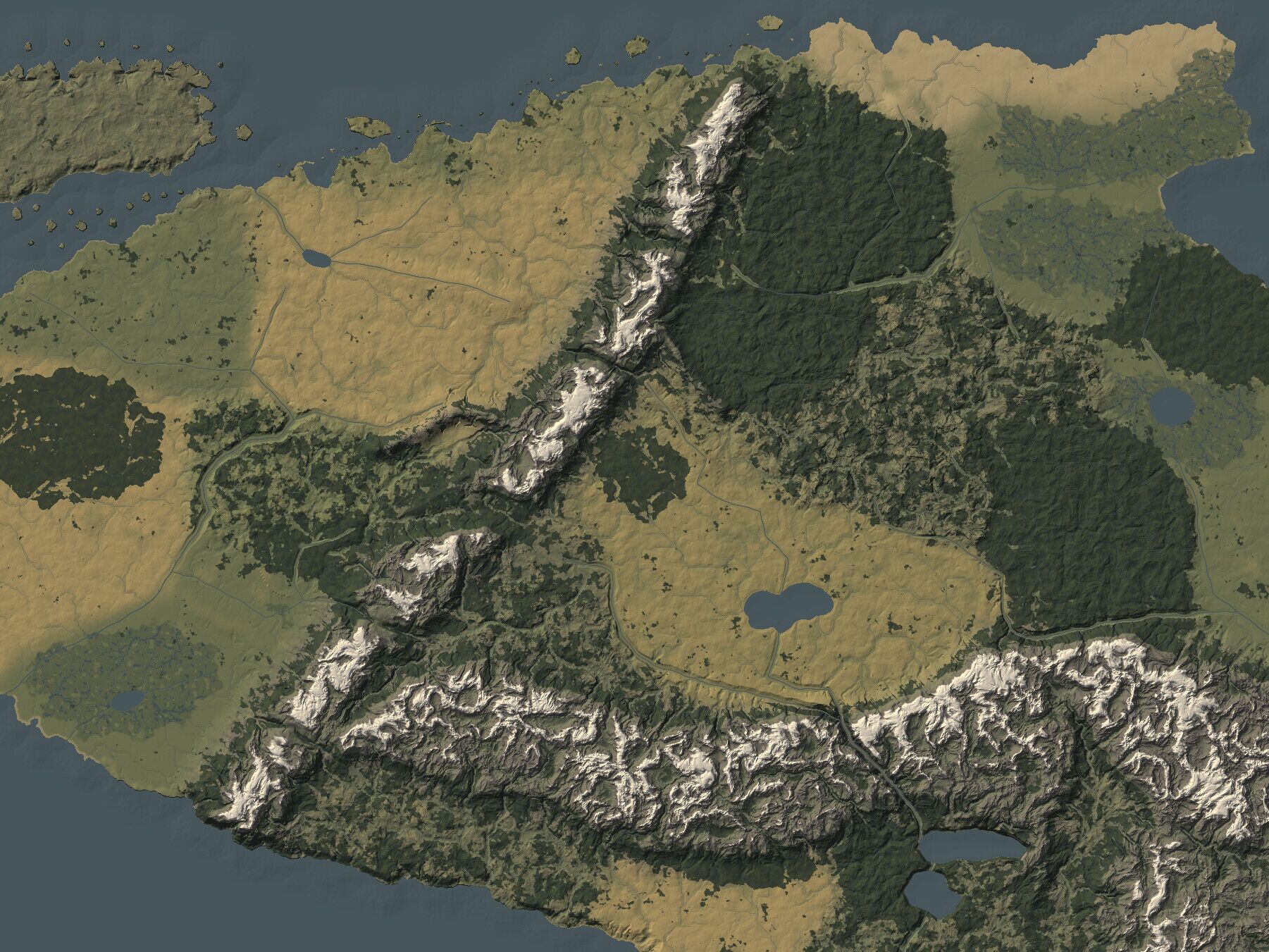
The map isn't a backdrop with provinces painted on top. It's built like real geography, and that geography decides how the game plays.
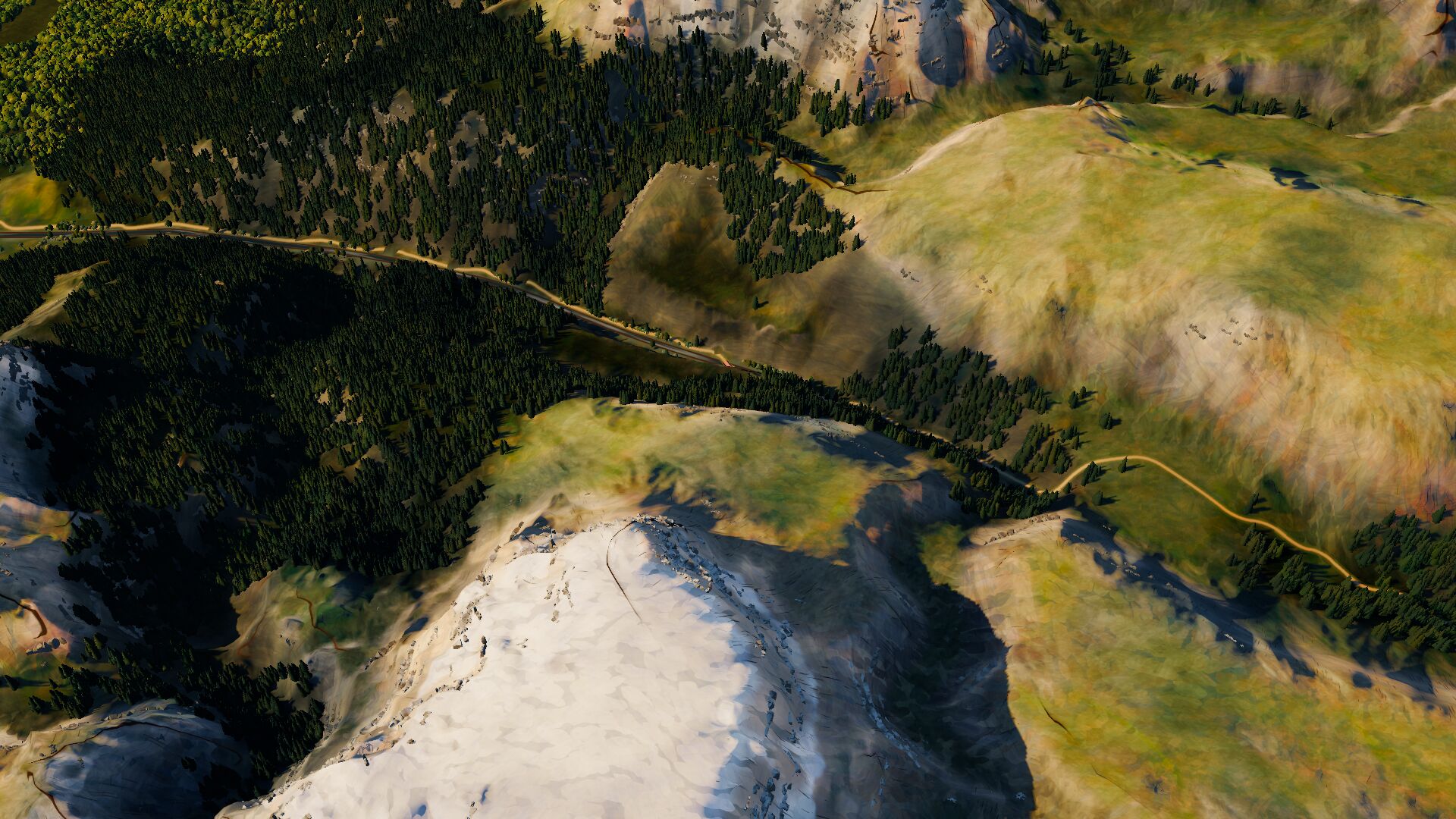
- Mountains get in the way, and passes are the way through. The map compiler checks every pass. Going over it has to be a lot cheaper than going around, at least one and a half times, or the build fails. A pass you can just walk around isn't worth holding.
- Rivers have to be crossed. Small ones you can wade through almost anywhere. Big ones only at certain fords, ferries and bridge sites, which makes those places worth fighting over and worth building on.
- Roads follow the land. A road takes the cheapest path over the terrain, and that cost (distance, plus extra for slopes, forest, marsh and river crossings) is exactly what the road costs in the simulation. A road up a mountain valley is a very different investment from one across a flat plain.
- Resources and soil decide what a region is good at. Where the ore, timber and good farmland are decides what each region can become, and what you build your realm around. Mining hills should play differently from a fertile river plain.
The full world is planned at about 900 × 675 km, with five or six realms of fifteen to thirty towns each, separated by mountains and rivers. With few towns and long distances, every town matters, and getting things from A to B becomes the real limit on what you can do.
Rule 4: More decisions, fewer clicks
Strategy games get tedious when you already know what to do but still have to click it into existence twenty times. The game should ask "how do I secure the eastern border?" and the answer shouldn't be "upgrade twelve roads, assign forty workers and restock six warehouses".
Two things help with that.
The automation has to be good. If managing every farm by hand got you 30% more grain, you'd feel like you had to do it, no matter how boring it was. So the automation needs to be close to optimal. You step in because you want something different, not because the game quietly punishes you for trusting it.
Growing should give you bigger levers, not more buttons. The plan is that a young state works hands-on: a few projects, levies raised when needed, supply sorted out on the spot. A developed state works through standing orders and permanent institutions. Your realm gets bigger, but the number of things you have to do stays about the same. This is one of the parts I'm still designing, so expect more on it later.
Money also isn't the only limit. Big plans need engineers, skilled workers and builders too, so a full treasury doesn't mean you can build everything at once.
Let it grow, or speed it up
For most economic growth you get a choice. You can let it happen on its own, which is cheap and follows real demand, but slow, and it might not happen where you need it. Or you can pay for it directly, which is fast and targeted, but costs money, takes workers from somewhere else and moves prices. Workshops the Crown pays for don't turn into money machines for the state, so building every profitable workshop yourself is never the best move.
Rule 5: War is an economic event
Armies use up people, food, gear, money and transport, all from the same society that keeps everyday life running. A recruit is a farmer who isn't farming anymore. Armies eat, wear out their weapons and march on the same roads your traders need.
Most of the important military decisions happen before the fighting starts:
- when to call people up, and where they should gather;
- which roads to protect and where to put supply depots;
- how much food and gear to stockpile in peacetime, when you could be growing instead;
- whether the roads and bridges can even carry the army.
Supplies travel on the same roads as normal trade. If a road is cut or jammed, the army runs short for real, with late deliveries and empty wagons instead of a combat penalty. A well-supplied army should be able to beat a bigger one that runs out of food.
And losses don't just vanish. If a region sends a thousand recruits and three hundred don't come back, that region has fewer workers, poorer households and a harder time filling the next levy. Even a won war leaves its mark at home.
Rule 6: Battles like a game of chess
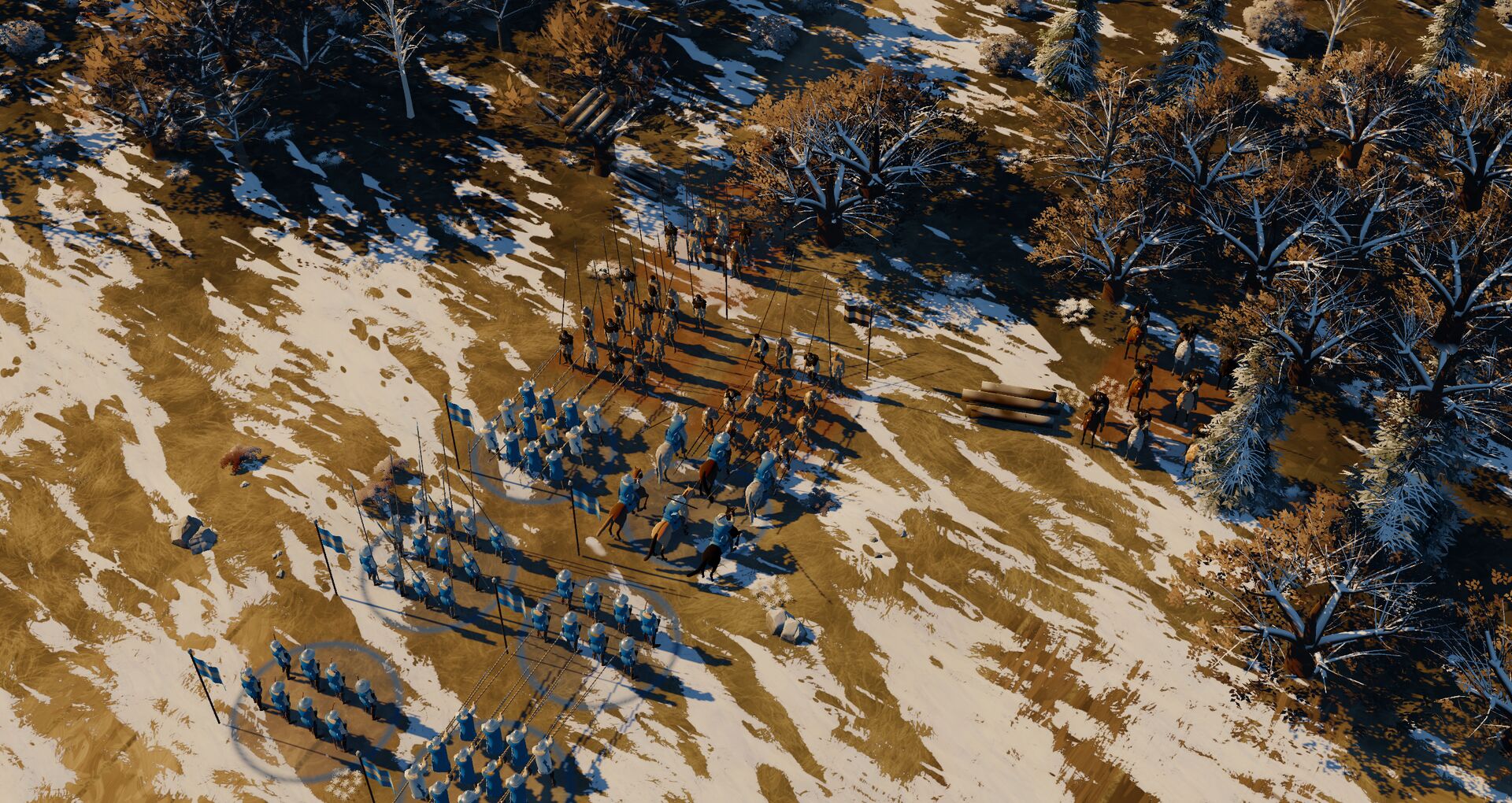
When you take command of a battle, it's played on a board, and the inspiration is chess rather than real-time tactics:
- No dice. The same position and the same orders always give the same result.
- No micro. Companies move on a grid of squares and the two sides take turns. How fast you click doesn't matter, only where you put your companies.
- The board is the place. The board is where the fight actually happens: an open field, a ford, a bridge, a causeway, a mountain pass, a forest edge or the edge of a town. A bigger army doesn't get a wider front. The extra companies wait in reserve and come in as room opens up.
- Gear defines the unit. What a company can do (move, fight up close, shoot, charge, brace for a charge) comes from what it's carrying, not from its name.
- Retreating is a real option. A side that pulls back in good order keeps its gear and brings its wounded home. A side that breaks loses both, and that loss goes straight back into the economy.
So both kinds of skill matter. Strategy decided what you brought: how many men, how well supplied, how ready. Tactics decide what you do with them on the board. Smaller fights can be handed to a commander, who plays by the same rules and only knows what you would know.
Rule 7: You never know everything
A real ruler doesn't have perfect information. Instead of "Enemy army: 12,437 soldiers", your scouts tell you 10,000–14,000. The true number is always in that range, but it isn't necessarily in the middle, so it's smart to plan for the bad end. Better information is something you can build up over time: scouts, merchants and officials all report back, and get better at it as your state develops.
The economy works the same way. If every road or institution came with an exact, guaranteed return, the strategy would boil down to sorting a list by profit. Instead, results depend on demand, war, population and what the other realms do. You get enough information to understand what's going on, but not enough to predict it perfectly.
Events follow the same rule. "Mine collapse: lose 5,000 gold" is a dead end. "Heavy rain washed out a mountain road" is a problem that feeds into everything else: iron arrives late, prices go up and the armoury falls behind. Then it's up to you: fix it right away, send engineers, send trade another way, or buy iron from somewhere else.
Rule 8: Success isn't just map size
A realm can become great in lots of ways: trade, learning, medicine, metalwork, military might, roads and bridges, or plain old land. That identity shouldn't be a bonus you pick at the start. It should grow out of what you put your time and money into over the years, and what you gave up for it.
For that to work, history has to matter. You can build a hospital fairly quickly, but you can't instantly conjure up experienced physicians, hard-won knowledge or a reputation that attracts the best people. And those people might leave if a rival makes them a better offer. Money helps, but these things take time. A small realm with excellent institutions should be just as valid a way to play as conquering everything in sight.
That's it for this first one! Thanks a lot for reading this far.
Next time I'll show how the map is made. The world is drawn as geographic data in QGIS, and then a compiler turns it into a terrain model with a point every 250 metres. It works out where rivers drain, routes roads along the cheapest ground, and checks that every mountain pass is a real chokepoint. So much of the design depends on the land being right that it felt like the natural place to start.